

The Small Mobile Henhouse: A “Chicken Tractor” Based on Permaculture Principles

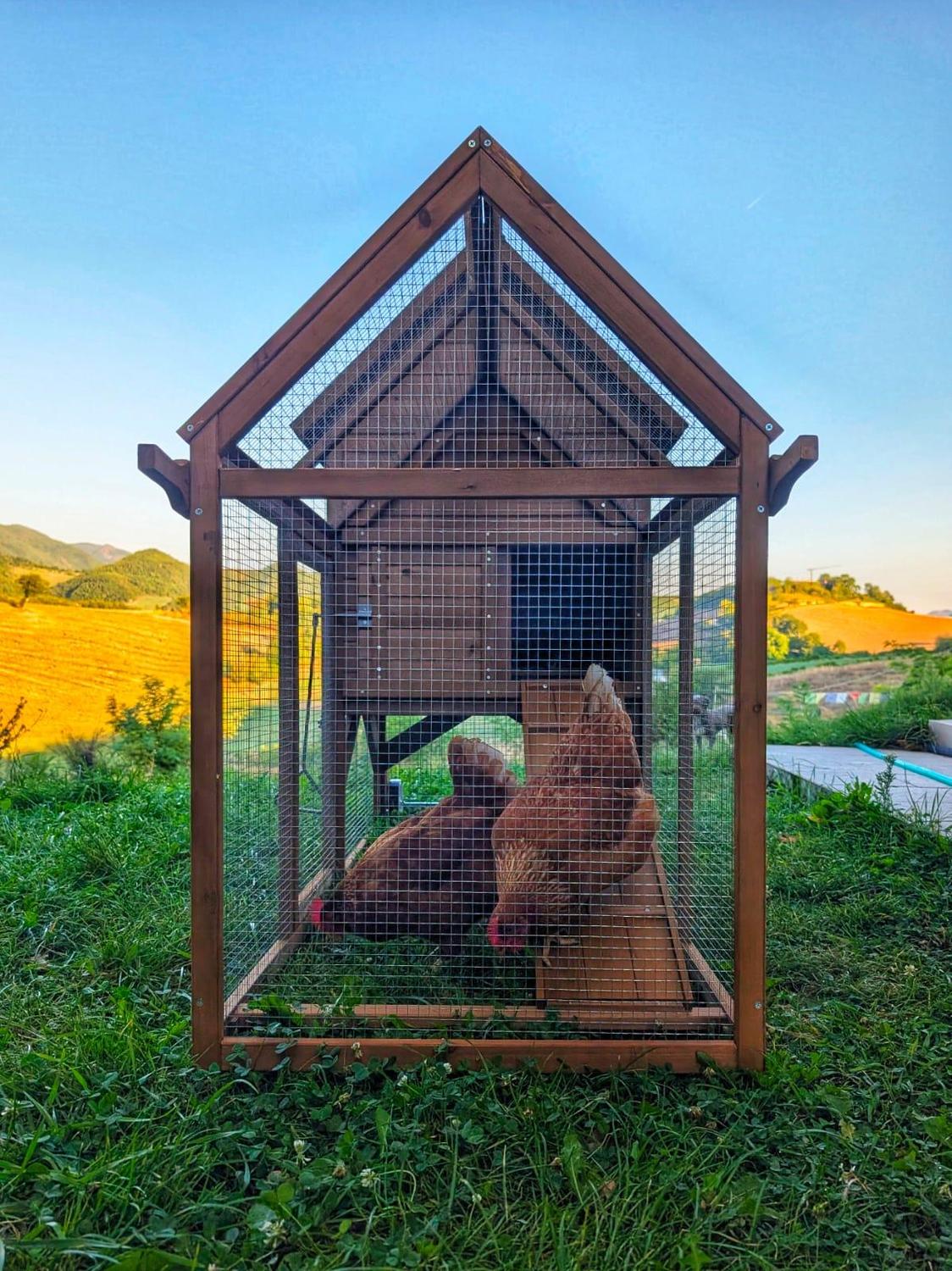
In the heart of the countryside, even a simple structure can become part of a broader agricultural system—one that respects natural cycles and creates value. This small mobile henhouse was designed precisely with that purpose in mind: to provide chickens with a sheltered, comfortable and easily movable space, following the principles of permaculture.
## What Is a Chicken Tractor?
The English term *chicken tractor* refers to a movable poultry shelter that allows chickens to live outdoors while being periodically relocated to different parts of the land.
Unlike a fixed henhouse, this structure can be moved without the use of machinery. The chickens therefore become genuine “soil workers”: they scratch, peck, lightly disturb the surface of the soil and contribute to its natural fertilisation.
The model shown here is compact and functional. Its wooden frame is enclosed and protected by wire mesh, while the pitched roof recalls the shape of traditional rural buildings and provides shelter from the weather. Wheels and side handles make it easy to move from one area to another.
## A Safe Shelter for Chickens
The wire mesh has an essential role: it allows air and light to circulate while protecting the birds from predators and unwanted intrusions. Inside, the chickens can move around, rest, scratch the ground, and search for small insects and seeds.
The henhouse can be organised into different areas:
- A covered space for resting at night
- Raised perches
- Nesting boxes for egg laying
- A protected outdoor area for movement and scratching
- A section that can be shaded during the hottest days
Being able to move the shelter also prevents the ground around the henhouse from becoming excessively trampled or depleted. Regular relocation helps maintain better hygiene and reduces the build-up of parasites.
## The Role of Chickens in a Permaculture System
In permaculture, every element should serve more than one purpose. Chickens, in addition to providing eggs and companionship, can support the health of both the vegetable garden and the soil.
As they move through an area, they can:
- Reduce part of the spontaneous vegetation
- Eat insects and larvae
- Loosen the upper layer of soil
- Spread manure naturally
- Turn plant residues and organic waste into useful material
- Prepare an area for future cultivation
Their work does not completely replace human effort, but it complements it. After the mobile henhouse has passed through an area, the soil can be left to rest or prepared for a new crop, mulching, or sowing.
## Using It in the Vegetable Garden and Orchard
A chicken tractor can be moved according to a planned rotation. For example, it may remain for a few days on a small section of land before being relocated to another area.
One possible sequence is:
1. The chickens are moved into an area with tall grass or crop residues.
2. They scratch the ground and reduce the surface vegetation.
3. Their manure enriches the soil.
4. The henhouse is moved elsewhere.
5. The area is left to rest.
6. After an appropriate interval, sowing or transplanting can take place.
In an orchard, the structure can be placed temporarily beneath mature trees, while keeping a safe distance from young trunks and shallow root systems. Chickens can help reduce the presence of certain insects and fertilise the soil, but newly planted trees should be properly protected.
## An Example of Circular Economy
A mobile henhouse is a small example of circular economy applied to rural life. Chickens receive food, protection and space; in return, they provide eggs, manure and a valuable ecological service.
Manure can be collected and composted together with leaves, straw and plant residues. Once mature, the compost can be used in the vegetable garden or around fruit trees.
The bedding can also become part of the soil-fertility cycle. Materials such as straw, dry leaves and wood chips absorb moisture and, once composted, become a valuable resource for cultivation.
## Planning Movements Carefully
To work well, a chicken tractor needs to be moved regularly and should not remain in the same spot for too long. How often it needs moving depends on the number of chickens, the size of the structure, the season and the amount of vegetation available.
It is useful to observe the ground carefully:
- If the grass has been completely eaten, it is time to move the enclosure.
- If the soil becomes heavily compacted or muddy, another area should be used.
- If too much manure accumulates, the chickens have probably stayed too long.
- During warm periods, shade and fresh water must always be available.
- At night, the structure should be checked to ensure it is securely closed and stable.
The simplicity of the system does not remove the need for daily care. Clean water, balanced feed, regular checks of the mesh, and observation of the chickens’ behaviour remain essential.
## A Small Project With Many Functions
This mobile henhouse is not merely an animal shelter. It is a landscape-management tool, a practical aid for soil fertility and a concrete way to move towards a more integrated form of agriculture.
By following permaculture principles, the structure connects several elements: animals, soil, plants, organic residues and human work. Each move becomes part of a rotation, every resource can be reused, and every activity helps keep the farm’s natural cycle alive.
In a rural setting, even a small henhouse can therefore become an example of sustainable design: mobile, adaptable and able to work with nature rather than against it.